


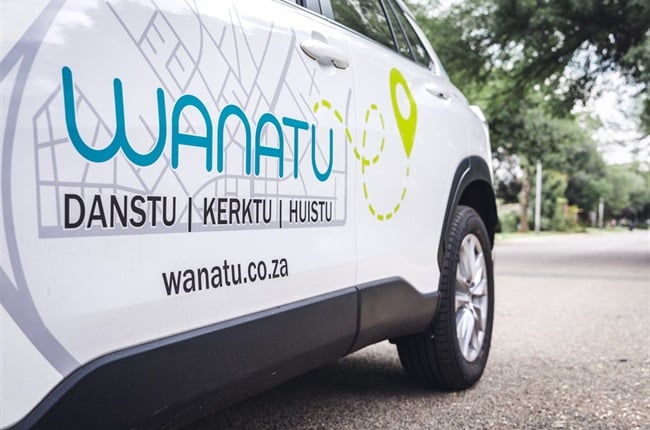
South Africa’s e-hailing industry is at a crossroads. While Bolt and WANATU have secured their operator licences ahead of the March 11 deadline, thousands of drivers are still scrambling to get their permits, leaving many at risk of fines and potential street-level conflicts.
Bolt confirmed it received its Certificate of Registration from the National Public Transport Regulator (NPTR) on February 27. “Receiving the Certificate of Registration from the NPTR is an important milestone not only for Bolt, but for the broader e-hailing industry, as it strengthens trust and enhances safety for both driver operators and passengers,” said Fikile Nzuza-Chunga, senior public policy manager for Bolt South Africa.
WANATU also completed the full NPTR registration process under the new regulations, clearing the way for its drivers but only in theory. Drivers cannot apply for their own permits until their platforms are licensed, and with just days to go, most have yet to start.
“The Western Cape government told us they would wait for the apps to register before issuing driver permits,” said Siyabonga Hlabisa, chairperson of the Western Cape E-Hailing Association (WCEA). “That timeline cannot be treated as a hard deadline.”
The delay poses safety concerns in a sector that has historically clashed with the R90-billion taxi industry. Traditional taxi operators often view e-hailing as illegal, resulting in intimidation and occasional violence.
Dalitso, a Johannesburg Uber driver, said, “The rollout seems snail-paced. I am panicking. If the deadline passes and I don’t have a permit, we might face conflicts with the taxis.”
Department of Transport spokesperson Collen Msibi acknowledged the registration process is slower than expected and said the full list of licensed companies is expected by the end of March. Yet, this may still leave drivers with little time to finish their own applications, risking penalties of up to R100,000 ($5,700).
While Bolt and WANATU are licensed, Uber, with more than 40,000 driver-partners, has applied but not yet received approval. “We are engaging constructively with the relevant authorities to ensure compliance,” the company said.
Without faster provincial rollout of driver permits or an official extension, the March 11 deadline could bring chaos rather than order, leaving drivers caught in the middle of regulation and reality.