







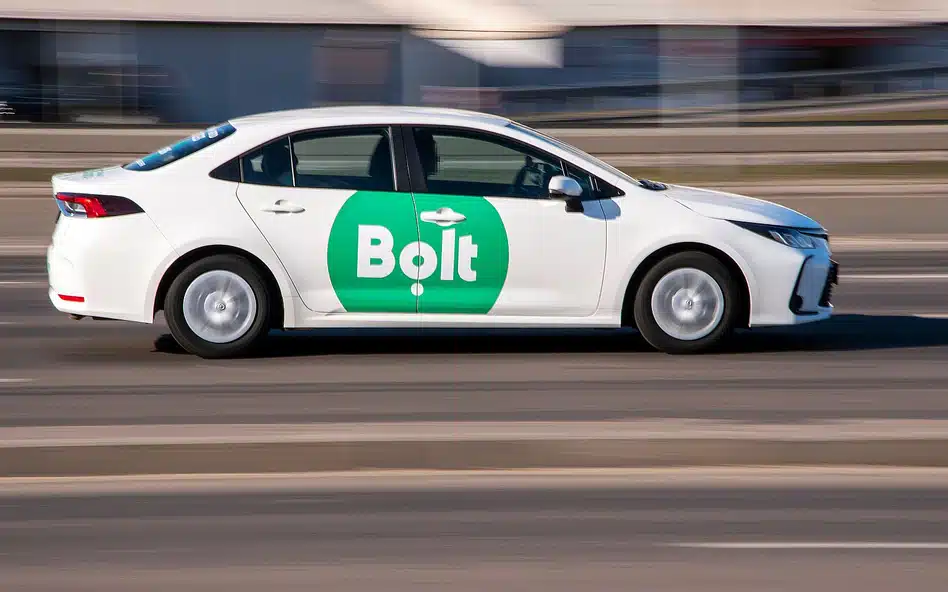
Over 80% of ride-hailing transactions in South Africa are still paid in cash, highlighting a stark contrast with Nigeria’s rapidly digitising market, according to a joint report by Bolt and Ipsos.
While South Africa leans heavily on cash, over 85% of ride-hailing trips in Nigeria are completed through digital payments. The gap reflects deeper structural differences in how the gig economy operates across both countries.
In Nigeria, ride-hailing makes up 24% of a $5.17 billion gig economy that supports roughly 3 million workers. E-commerce leads the space, accounting for 38% of activity. By comparison, South Africa’s gig economy is valued slightly lower at $5.03 billion, with between 1.8 million and 2 million participants. There, ride-hailing and e-commerce are evenly matched, each contributing 29%.
Despite ongoing efforts to modernise payments, cash remains deeply embedded in South Africa’s economy. Data from the South African Reserve Bank shows that cash still accounts for 56% of all consumer transactions by volume. Even as digital options like cards, mobile wallets, and instant payment systems such as PayShap gain traction, adoption remains uneven particularly in informal and lower-income segments.
That broader shift toward digital payments has yet to fully translate into ride-hailing. According to a 2025 payments report by Stitch, more than 90% of consumers used alternatives to cash and cards in the past year, but cash continues to dominate within ride-hailing.
Nigeria’s transition has been shaped by both economic pressure and platform strategy. Following the removal of the fuel subsidy in 2023, ride-hailing platforms adjusted fare structures and improved payout timelines for drivers moves that have accelerated the shift to cashless payments.
These differences are also shaping financial access for drivers. In Nigeria, platforms are increasingly partnering with fintechs to offer services like micro-loans and vehicle financing. For instance, Bolt has collaborated with Advancly to roll out in-app credit options, helping drivers tap into formal financial systems.
In South Africa, where cash still dominates, access to such digital financial tools has been slower to develop. However, the report notes that partnerships between fintechs and local banks are beginning to expand services like instant transfers, insurance, and small-scale lending.
Beyond payments, the data underscores how drivers rely on platform work. Based on a survey of 250 South African respondents across multiple gig sectors, 70% use ride-hailing to supplement their income, while 30% depend on it as their primary source of earnings. For more than half, the platform contributes 50% or less of total income.
Still, its impact is significant: over 90% of respondents reported improved living standards since joining. Most earnings go toward essentials such as food, rent, transport, and education, while about a third cited financial independence as the biggest benefit.
“In South Africa’s current economic climate, ride-hailing is no longer just about mobility. It’s about opportunity,” said Simo Kalajdzic, a senior operations manager at Bolt, pointing to a growing wave of self-directed, flexible work.
The sector remains overwhelmingly male-dominated in both countries. In South Africa, men account for 92% of participants, compared to 96% in Nigeria. Most Nigerian drivers have also stayed active on platforms for over a year, suggesting sustained engagement.
Regulation is beginning to catch up. South Africa’s National Land Transport Amendment Act formally recognised ride-hailing as part of the public transport system, introducing licensing requirements, safety features like panic buttons, and standardised fares.
At the same time, platforms are experimenting with ways to cut costs and modernise fleets. In 2025, Uber rolled out its first electric vehicle fleet in South Africa, signalling early steps toward a more efficient and sustainable future for the sector.


