





South Africa has more organisations lending to small businesses than it did seven years ago. Yet billions of rand in potential business funding remain out of reach for the companies that need it most.
The country’s micro, small and medium-sized enterprises (MSMEs) are estimated to face a R350 billion ($21.5 billion) financing gap, even as the number of SME funders has grown from 148 in 2018 to more than 300 in 2025, according to the Organisation for Economic Co-operation and Development (OECD).
The numbers point to a problem that is not simply about a shortage of lenders or capital.
For many small businesses, the bigger obstacle may be proving to a lender that they are worth the risk.
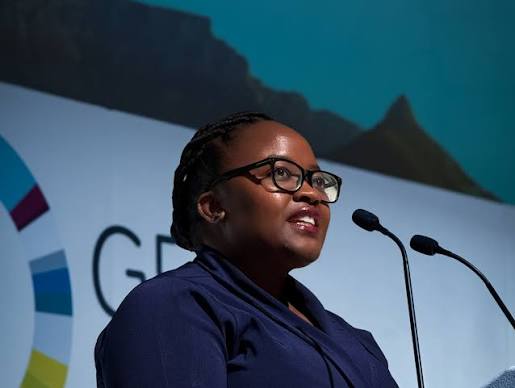
Edna Sathekga-Montse, Group Chief Transformation and Sustainability Officer at African Bank, argues that financial institutions need a clearer picture of the businesses behind the loan applications.
“When we understand them better, it allows us to assess their affordability and assess their credit status a lot better and a lot differently,” she said on the sidelines of the Global Entrepreneurship Congress Africa (GEC+Africa) in Cape Town.
For a bank, lending to a small business is ultimately a bet on future cash flow. The difficulty is that many businesses do not have enough reliable, easily accessible information to make that future visible.
A business owner may have years of sales invoices, regular customers, bank transactions, payroll records, tax documents and purchase orders. But if those records are fragmented or difficult for a lender to verify, much of that information never becomes part of the credit decision.
That creates a gap between the business a lender sees on paper and the business that actually exists.
The scale of the problem is significant. The OECD’s Financing SMEs and Entrepreneurs 2026 report estimates that 56% of South Africa’s MSMEs are unregistered. Only 7% used a formal financial-services provider business loan to start their business.
At the same time, MSMEs account for about 80% of employment in the country.
For Sathekga-Montse, this means lenders need to rethink how they assess risk.
“Without the data that we require, we are unable to, as organisations, understand whether or not any type of risk falls within our risk appetite,” she said.
The data may already be there.
An invoice can indicate money a business expects to receive. A purchase order can demonstrate that a customer has committed to buying. Regular digital payments can reveal revenue patterns, while accounting and payroll records can provide clues about the health and scale of a company.
Used together, these signals can tell a lender considerably more than a traditional credit score on its own.
South African businesses are also becoming increasingly connected to digital financial systems. Nearly 80% of MSMEs use digital financial services, according to the OECD.
But digital adoption remains uneven. Only half have internet access, 49% have a social-media presence and just 32% have a website.
That means the country has a growing amount of digital business activity, but not every small company has the infrastructure to turn that activity into a clear financial record.
African Bank is attempting to address part of the problem by expanding its relationship with entrepreneurs beyond conventional lending.
Sathekga-Montse said the bank provides support around areas such as payroll, tax and human resources alongside its financial products. The aim is to help businesses become more structured while giving the bank a better understanding of the companies it serves.
“We furthermore are able to really link our enterprise and supply development efforts a lot closer to our business and commercial efforts,” she said.
The smallest businesses are particularly exposed to the funding problem.
The September 2026 SA MSME Access to Finance Report 2025, produced by Finfind in partnership with African Bank, found that 85.6% of finance applicants generated less than R1 million ($61,538) in annual turnover.
These formal micro-enterprises account for more than 80% of jobs created by MSMEs and more than 85% of funding demand, but remain among the businesses least served by lenders.
Credit scores add another layer to the problem. The report found that 50.9% of owners of businesses with annual turnover below R1 million have poor or below-average credit scores.
That does not necessarily mean a business has no ability to repay.
It can mean that traditional credit information does not capture the entire story.
This is where alternative data could become useful.
Instead of relying exclusively on a company’s credit history, lenders can examine the activity happening inside the business. Consistent invoices, purchase orders, payment records and other verified transactions could help establish whether a company has enough underlying activity to support financing.
African Bank already offers products that work around some of these signals, including invoice discounting and purchase-order financing.
But Sathekga-Montse does not see technology as a standalone solution.
“We need development finance institutions as well, who help to de-risk through schemes such as credit guarantee schemes and so forth,” she said.
The funding challenge also extends beyond what banks do.
Large companies can influence the financial health of small suppliers simply by deciding when to pay them. A delayed invoice can leave a small business struggling to cover salaries, purchase stock or take on another contract.
For a company operating with little working capital, the timing of one payment can have consequences across the entire business.
That is why closing South Africa’s SME financing gap may require more than putting additional capital into the market.
It may require building better financial records, improving access to business data and giving lenders more ways to distinguish between a business that is genuinely too risky to finance and one that simply does not fit neatly into the traditional credit system.
The question, then, is not only where South Africa will find another R350 billion for its small businesses.
It is also whether lenders can get a clear enough view of those businesses to know where the money should go.
For Sathekga-Montse, that relationship should start with understanding the entrepreneur rather than simply processing an application.
“Tell us about your business, tell us about what you need, and let’s figure out a way for us to work the journey with you,” she said.


