


African small and medium enterprises (SMEs) have relied on retail apps like AliExpress and more. Recently Temu to source affordable goods from China without the cost of travelling. These platforms opened a window into China’s vast product market, but they were never built for businesses that need reliability, bulk pricing, custom orders, and direct factory relationships.
That gap created the perfect runway for Midddleman, a Nigerian tradetech startup helping African businesses source directly from Chinese manufacturers offering cheaper prices, tighter quality control, and a smoother cross-border procurement process.
The scale of the opportunity is massive. Nigeria–China bilateral trade stood at about $22.6 billion in 2023. An estimated 80–90% of Nigeria’s imports from China are manufactured goods machinery, electronics, plastics, vehicles, steel, and more. Nigerian importers are already plugged into Chinese factories; what they lacked was infrastructure that understood their needs. Midddleman stepped into that space.
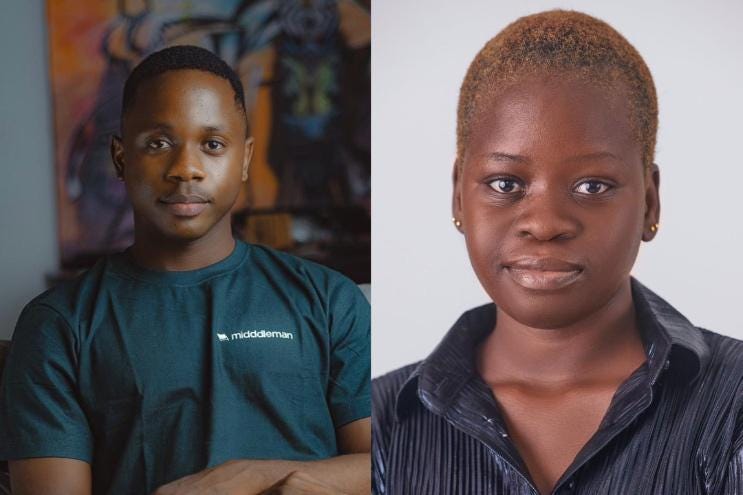
Omolara Sanni and Adeola Owosho left Abeokuta for Lagos with no roadmap, just ambition. They moved from conference to conference searching for what to do next. One event, hosted by Nairabet founder Akin Alabi, exposed them to the booming mini-importation trend: buy from China, sell online in Nigeria.
With less than ₦100,000, they placed their first Alibaba order and tried their hands at everything skincare, car accessories, home décor, anything Instagram shoppers might click on.
“People didn’t trust us enough to pay before delivery,” Sanni recalls. “We sent items to customers outside Lagos, and many never picked up. Some even stopped responding. We lost money.”
The mistrust made scaling impossible. As they jumped from idea to idea, a deeper insight emerged. Nigeria didn’t just need online businesses, it needed safer ways to transact.
By 2023, they decided to solve that problem with technology. They built an escrow platform, also called Midddleman, where payments were held until buyers confirmed satisfaction. Technically, it worked. But practically, the market wasn’t ready.
“Customers didn’t trust vendors,” Sanni says, “but they also didn’t trust us to hold their money. Building brand trust was expensive—and we couldn’t afford it.”
Around 2020, Nigerian Naira cards stopped working for dollar payments. Importers were trapped. Sanni and Owosho switched to 1688 a Mandarin-only wholesale marketplace much cheaper than Temu or AliExpress and relied on their Alipay wallets to pay in yuan.
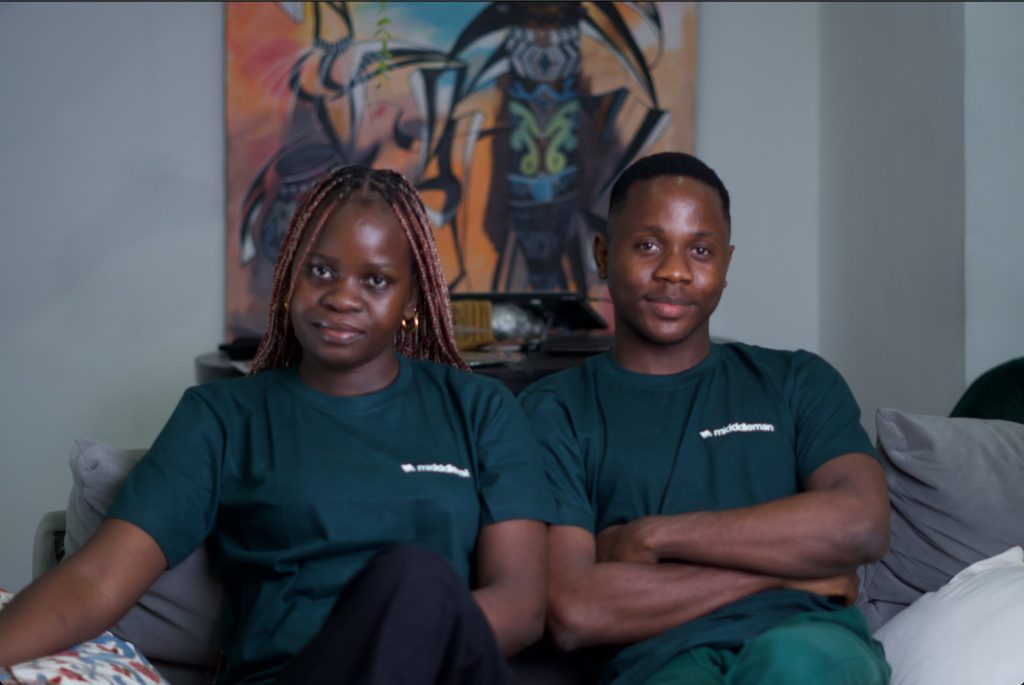
They quickly realised this wasn’t just their struggle. Many SMEs around them were facing the same issues: unreliable payments, confusing Chinese platforms, and difficulty accessing factories.
That insight reshaped the company. They pivoted Midddleman into a procurement and payment platform built specifically for Africa–China trade. The response was instant.
“Within a day or two of announcing it, people started paying through us,” Sanni says. “Payments remain one of the biggest pain points in China–Africa trade—and that’s what drove us to nearly ₦2 billion in transaction volume in 2025.”
Their users weren’t online shoppers anymore, they were businesses. And businesses needed more than app-based retail. They needed direct factory access, negotiation support, quality assurance, Mandarin translation, consolidated shipping, and secure yuan payments.
And that’s where platforms like Temu and AliExpress simply fall short.
“Temu is great if you want to buy five shirts,” Sanni explains. “But businesses can’t make a profit buying from Temu. They need factories. They need customisation. They need checks and verifications.”
Midddleman’s biggest differentiator isn’t payments, it’s its procurement agents stationed in China.
“For importers, the fear is real,” Sanni says. “What if the supplier ships something low quality or entirely wrong? Our agents go into the factory, inspect everything, confirm materials, and make sure what you ordered is what you get.”

Agents also negotiate bulk prices, consolidate items from multiple suppliers, repack goods to reduce shipping costs, and generally act as an extension of the importer’s team on the ground.
“I’ve been using Midddleman for over a year, and I enjoy their response to my services,” says Arigbabu Adewale, CEO of Congent Paint, which imports raw materials from China. “They’re reliable.”
Sanni pushes back against the old stereotype that “China equals low quality.” She argues that the issue is mismatched expectations.
“China gives you exactly what you pay for,” she says. “If you buy cheap, you’ll get cheap. But the same factories also make top-tier goods. People from the US and UK source entire home interiors from China.”
Another major hurdle for African importers is language. 1688 the preferred marketplace for Chinese factories is almost entirely in Mandarin. Traditionally, importers screenshot items, paste them into Google Translate, and piece together whatever meaning they can.
Midddleman steps in to bridge this gap, layering technology and human support to help African SMEs navigate the world’s largest manufacturing ecosystem without the usual friction.
They raised just $46,000 so far mostly from family and friends. Even with such modest funding, the company says it has processed nearly ₦2 billion in transactions. Their advantage, they insist, is community and sheer resourcefulness.
“Some of the most important people you’ll meet in your journey are the ones sitting right beside you,” Sanni says, reflecting on how they leaned heavily on peers who believed in their vision and helped them keep operations lean.
Their team also expanded out of necessity. After several failed attempts to outsource software development, they realised their technology had to be built internally. Their CTO, Abiodun Arigbede, became the anchor for turning their ideas into a working product an MVP that solved the immediate problems importers faced and could evolve as demand grew.
Though Africa remains its strongest market, Midddleman’s ambitions stretch far beyond the continent.
“Everybody buys from China,” Sanni says. “Not just Africans. We’re building a global platform a billion-dollar company born in Africa.”