


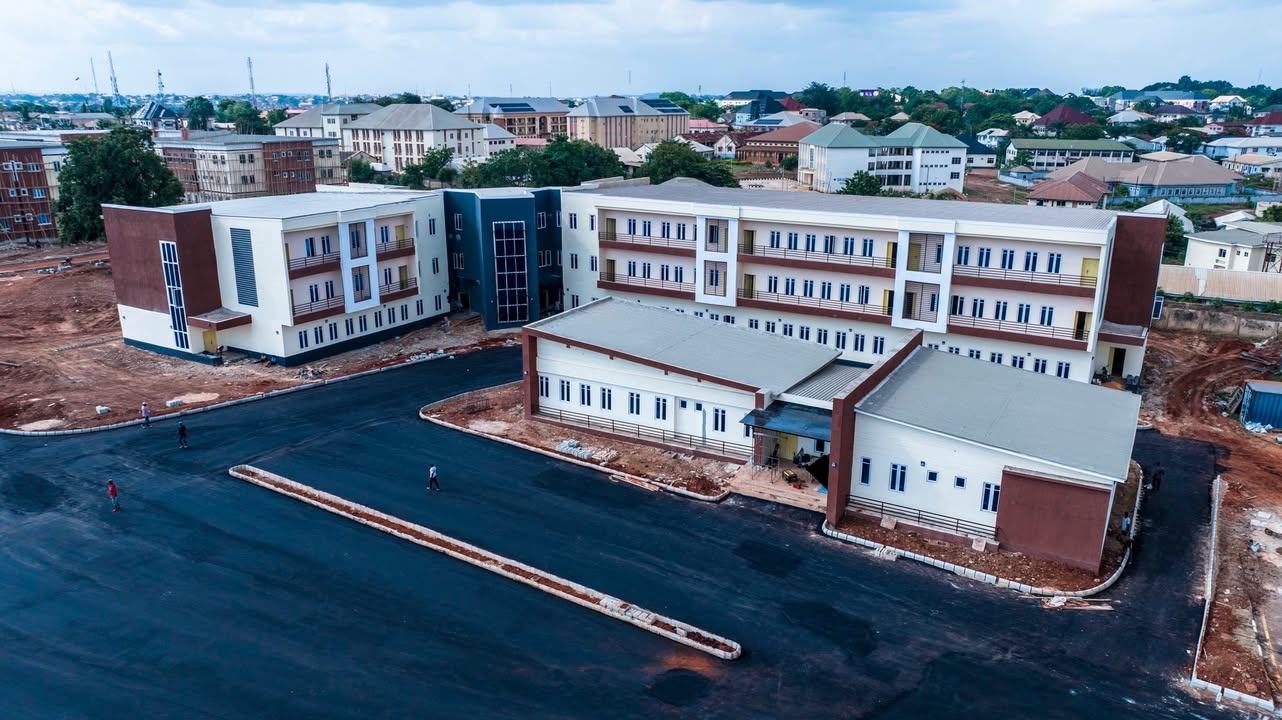
In the southeastern part of Nigeria Enugu. In communities where public schools have long struggled with poor infrastructure and outdated teaching, new buildings are rising. Modern, well-equipped, and designed for a different kind of learning.
Inside these classrooms, the contrast is clear. Interactive boards have replaced chalkboards. Science labs, digital libraries, and innovation studios are now part of the learning environment. In some cases, children who once spent their days hawking goods in nearby markets are now seated at desks, navigating lessons on computer screens.
The state government plans to build 260 smart schools one in each ward, in what is shaping up to be one of Nigeria’s most ambitious public education reforms. The commitment is reflected in its budget: 32.27% of its 2026 spending has been allocated to education, the highest share among Nigerian states.
Before the rollout, the cracks in the system were already deep. According to Chinyere Onyeisi, Special Adviser to the Governor on Education Innovation, the state uncovered what she describes as a “learning crisis” during early assessments.
“Three out of four children in our public schools have foundational literacy problems,” she said during a visit to a pilot smart school in Owo, Nkanu East.
In some classrooms, the situation was stark. Out of 40 students, only a handful could read or write at the expected level. Many had been promoted year after year without mastering basic skills, often moving through the system with significant gaps in their learning.
The issues went beyond academics. Students frequently changed schools, dropped out intermittently, or ended up in classes far above their level. Teachers, under pressure to retain enrolment, often passed them along rather than hold them back.
On paper, the numbers told a more optimistic story, Enugu recorded an 89.46% literacy rate in 2023, with relatively low out-of-school figures. But on the ground, the reality looked very different.
Rather than begin in urban centres, the government chose to pilot the smart schools in rural communities areas where the system was weakest.
“If it works in the village, it will work anywhere,” Onyeisi explained.
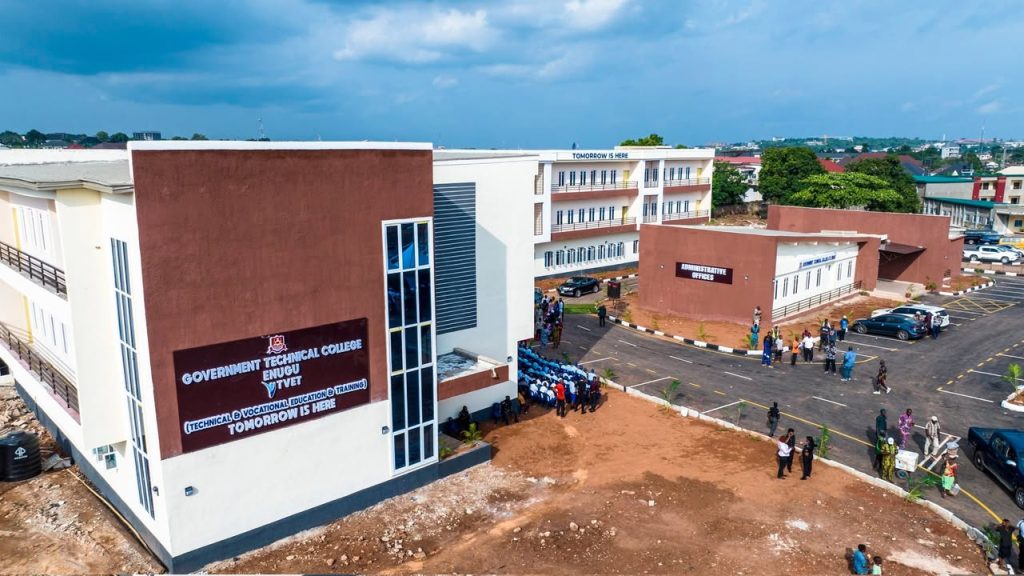
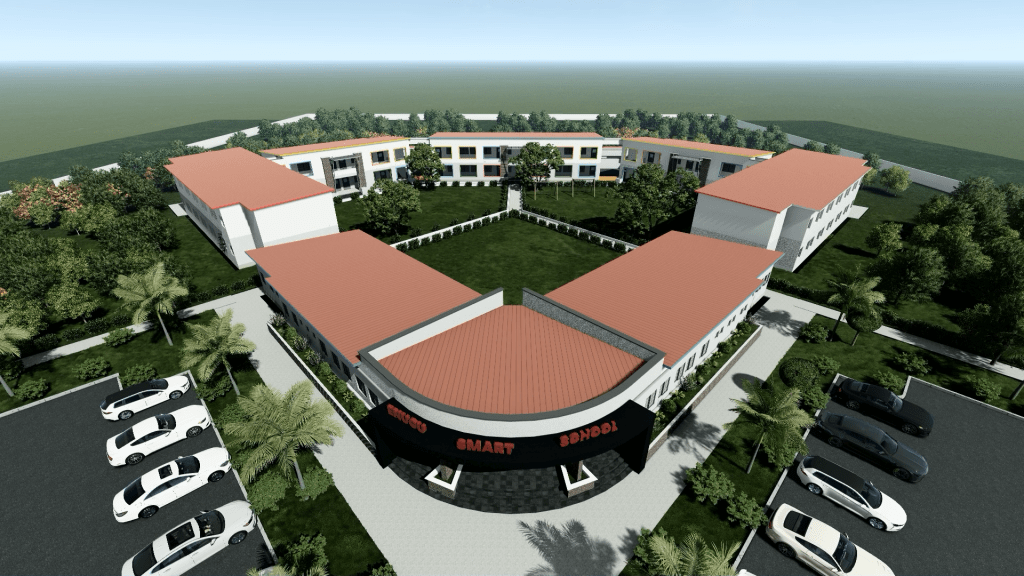
Each school is designed as a full campus, combining early childhood, primary, and junior secondary education. In some cases, multiple under-resourced schools are merged into one facility, bringing hundreds of students under a single system.
Beyond infrastructure, the model also tackles access. Students receive free uniforms, books, and daily meals an effort to remove the financial barriers that keep many children out of school. The state has set aside ₦30 billion to feed roughly 260,000 pupils across the planned schools.
The goal is simple: make school not just available, but unavoidable.
The most significant shift may not be the buildings, but the teaching itself.
For years, Nigeria’s public education system has leaned heavily on memorisation. Students learn to pass exams, often without fully understanding the material. The new curriculum for the 2025/2026 academic session aims to change that by focusing on critical thinking, problem-solving, and digital skills.
In these smart schools, lessons are designed to be practical. Students engage with what they are learning through experiments, discussions, and real-world examples.
A topic like drug abuse, for instance, is no longer taught as a set of definitions. Instead, teachers use videos, case studies, and conversations to connect it to real-life situations. In school farms, students plant crops, track growth, and record data. Learning science and mathematics in the process.
New subjects such as robotics, coding, artificial intelligence, and mechatronics have also been introduced, exposing students to skills that were previously out of reach in public schools.
But the transition has not been seamless.
When the first smart schools opened in September 2025, many students arrived with severe learning gaps. Rather than push ahead, the state paused the curriculum and focused on rebuilding foundational skills.
For weeks, classrooms shifted to basic reading and writing. Phonics, spelling, and handwriting. Students who needed extra help received targeted support.
There were early signs of progress. Engagement improved. Students began to follow lessons more confidently. But officials acknowledge that closing these gaps will take time.
To support the rollout, the state has partnered with a local subsidiary of China’s Haier Group to supply and assemble the technology used in the schools.
Thousands of desktop systems have already been delivered, with plans to expand to tablets for students. The long-term vision is for every child in the programme to have access to a personal learning device.
The project also extends into energy. Plans are underway to invest in solar power, battery production, and other renewable solutions to ensure the schools can operate independently of Nigeria’s unreliable grid.
In some classrooms, the impact is already visible.
Students are beginning to think differently about their futures. One pupil, during a radio programme, said she wanted to become a large-scale farmer, not just to grow crops, but to create jobs and improve food security.
Teachers are also noticing shifts. Students who struggle with traditional subjects are finding confidence in areas like robotics and hands-on projects skills that would have gone unnoticed in a conventional system.
Despite the promise, significant risks remain.
The biggest is scale. Building 260 schools is one challenge; maintaining them is another. Technology requires constant updates, reliable electricity, and ongoing technical support areas where public projects in Nigeria have historically struggled.
There are already early warning signs, with some facilities showing signs of wear.
Teacher capacity is another hurdle. Retraining educators to adopt new methods is a long-term process, and progress may vary across schools.
Then there is the question of funding. The model free meals, materials, and integrated technology is expensive. Sustaining it over time, especially in a volatile economy, will require consistent financial commitment.
For now, the rollout is being done in phases, reflecting both ambition and caution.
In the end, the success of Enugu’s smart school project may not depend on how many buildings are constructed, but on whether the system behind them can hold and evolve over time.