







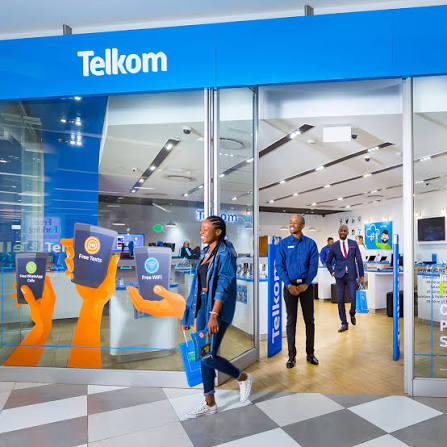
For decades, Telkom’s identity was built around fixed telephone lines and voice calls. Today, that era is fading into history.
The South African telecommunications giant has reached a significant milestone in its digital transformation, with data now generating nearly two-thirds of its operating revenue—a clear sign that the company’s future is increasingly tied to broadband, fibre and enterprise technology rather than traditional voice services.
In its trading update for the quarter ended June 30, Telkom said data contributed 62.4% of group operating revenue, highlighting how the business has evolved from a legacy telecom operator into one driven by digital connectivity.
The milestone reflects more than just changing consumer habits. It underscores a broader shift across Africa’s telecommunications industry, where operators are increasingly positioning themselves as digital infrastructure providers, investing in mobile broadband, fibre networks, cloud computing and enterprise services as demand for traditional voice continues to decline.
“Data remains the cornerstone of our strategy, contributing 62.4% of Group operating revenue,” the company said in its trading update, describing the performance as evidence of continued progress against its long-term strategic priorities.
The company attributed the quarter’s performance to sustained investment in mobile, fibre and digital services, backed by disciplined capital allocation.
That strategy is steadily reshaping Telkom’s business.
Once heavily dependent on copper telephone lines, the company now derives much of its growth from mobile data, fibre broadband and cloud services, reflecting the rapid migration of both consumers and businesses towards internet-based connectivity.
The mobile division remained one of the group’s strongest performers during the quarter.
Mobile service revenue rose 10.2% year-on-year, supported by growing demand for data services. Mobile data revenue increased 11.4%, while prepaid service revenue climbed 9.1%, driven by subscriber growth and higher data usage.
Artificial intelligence is also becoming a bigger part of Telkom’s consumer strategy.
The company said AI-powered customer value management platforms now generate 54.6% of prepaid service revenue by helping personalise offers, improve customer engagement and better match products with user behaviour.
Growth was equally evident in Openserve, Telkom’s wholesale infrastructure business, which continued expanding South Africa’s fibre network.
Homes passed by fibre increased 13.2% compared with a year earlier, while fibre subscribers grew 15.5%, reflecting sustained demand for high-speed broadband services.
During the quarter, Openserve also launched its own internet service provider, a move aimed at improving returns on its fibre infrastructure while maintaining its open-access model.
“We continue to invest in expanding our fibre footprint while improving utilisation of our network assets,” the company said.
The picture was more mixed at BCX, Telkom’s enterprise technology subsidiary.
Overall revenue fell 10.9%, largely because of weaker hardware and software sales as businesses remained cautious about technology spending.
However, demand for higher-margin digital services continued to grow. Cybersecurity revenue increased 36.6%, while cloud revenue rose 11.8%, signalling that enterprises continue to prioritise cloud migration and digital security despite broader economic pressures.
Telkom said BCX remains focused on expanding its digital services portfolio while strengthening its artificial intelligence capabilities to support customers’ digital transformation efforts.
Across the group, management said disciplined execution and continued investment in digital infrastructure have positioned the business for sustainable long-term growth, even as macroeconomic headwinds persist.
While legacy fixed-line and voice services continue to decline, they are no longer the defining drivers of Telkom’s business.
Instead, the company’s growth story is increasingly centred on mobile broadband, fibre infrastructure, cloud computing, artificial intelligence and cybersecurity—areas that are reshaping not only Telkom, but the wider telecommunications industry.
As consumers consume more data and businesses accelerate investments in cloud services, AI and digital security, connectivity has become far more than a utility for making phone calls. It is now the foundation of the digital economy, and Telkom is repositioning itself to compete in that future.


