







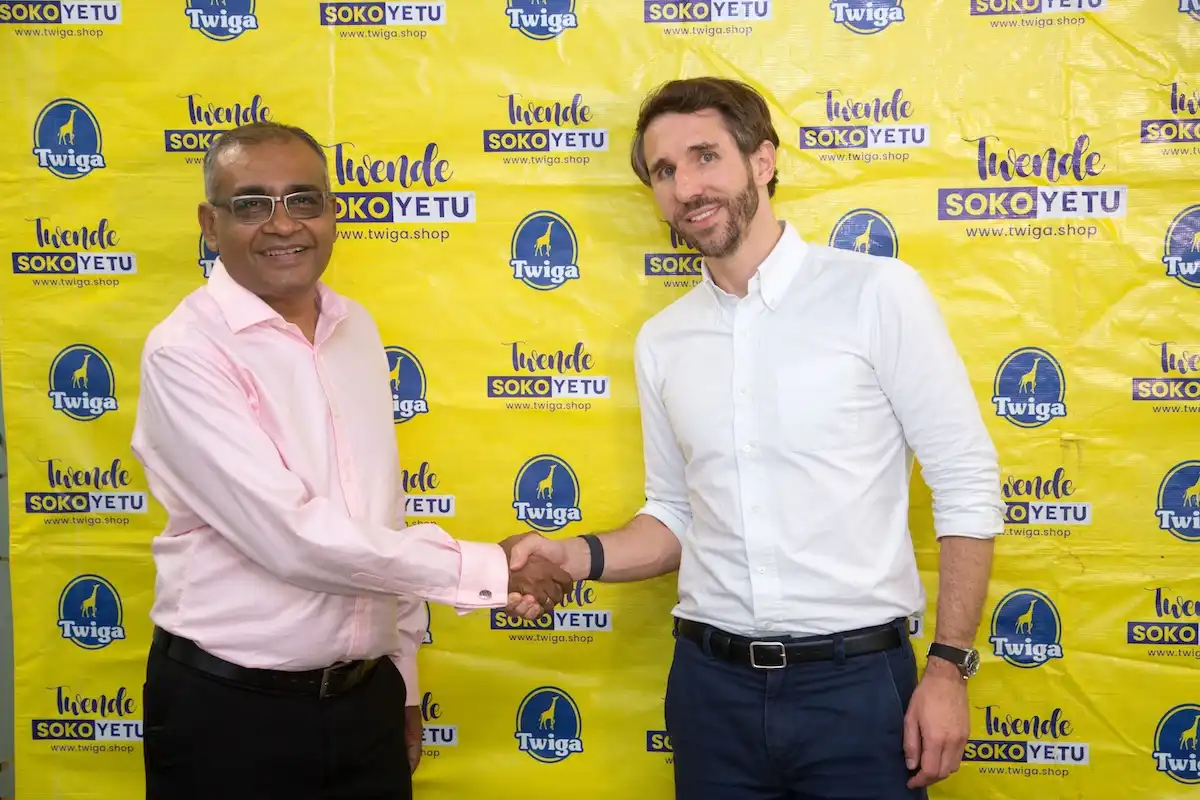
One of Kenya’s most heavily funded startups, Twiga Foods has entered administration after years of financial pressure, layoffs and attempts to restructure its business.
According to a gazette notice published on September 11, GT Flow Limited, formerly known as Twiga Foods One Limited, entered administration on August 17. Mohamed Mohamed was appointed as administrator and has taken control of the company’s business, assets and affairs.
The appointment means Twiga’s directors can no longer deal with the company’s assets without the administrator’s approval.
“The administrator takes control over the business assets and the management of the affairs of the Company without personal liability,” the notice said.
The move comes after several years of financial difficulties that have forced the company to cut jobs, raise additional funding and rethink the business model that helped it become one of Kenya’s most prominent startups.
From promising startup to financial pressure
Twiga Foods was founded in 2014 by Peter Njonjo and Grant Brooke to tackle problems in Kenya’s fragmented food supply chain.
The company built a technology-driven distribution network connecting farmers and suppliers with informal retailers, including kiosks and small shops. Its goal was to reduce the number of middlemen involved in food distribution while making it easier for retailers to access products.
The idea attracted significant investor interest.
Twiga raised about $185.4 million in funding, according to Crunchbase, making it one of Kenya’s best-funded startups. Its latest disclosed financing was a $35 million debt round in December 2023.
But by then, the company was already facing growing financial pressure.
Twiga had begun laying off employees and was dealing with unpaid obligations, including a dispute with cloud services provider Incentro.
In December 2023, Njonjo closed a $35 million convertible bond deal backed by existing investors Creadev and Juven. The funding was intended to help the company pay suppliers and stabilise its finances.
Njonjo later said he had invested $1 million of his own money into Twiga before leaving.
He stepped down from the company’s board in early 2024, and former Jumia executive Charles Ballard took over as chief executive.
The company continued cutting its workforce in 2024 as it tried to reduce costs and improve its financial position.
Twiga changes course
By 2025, Twiga was attempting a major overhaul of its business.
In May, the company acquired controlling stakes in three Kenyan FMCG distributors: Jumra, Sojpar and Raisons.
The acquisitions gave Twiga access to established customer bases and eight distribution centres across Kenya’s Central, Coast and Western regions.
The strategy was aimed at moving the company away from the costly model that had defined its earlier years and towards a leaner, more asset-light operation.
Twiga also began developing a new corporate structure around the businesses.
Internal documents from the period referred to a proposed “newco” that would sit above a group of operating companies.
The company said the structure would create a four-entity group, allowing the businesses to coordinate shared functions such as procurement, logistics and technology.
Jumra, Sojpar and Raisons would continue operating independently and serving their existing customers, while Twiga would focus mainly on informal retailers.
The company also planned to gradually centralise functions such as technology, procurement and business intelligence.
Twiga described the model as a hybrid, franchise-inspired approach, with individual businesses maintaining decentralised operations while sharing selected support functions.
The restructuring came with another round of job cuts, affecting more than 300 employees as the company worked towards a leaner operation with better margins and working capital.
Twiga also reviewed its distribution network, including its facility at Tatu City. The company considered leaving or renegotiating the site while exploring alternative locations closer to Nairobi, including Baba Dogo, Mombasa Road and Syokimau.
What happens next?
The administration of GT Flow now raises questions about the future of the structure Twiga has been building.
The gazette notice does not specify which assets or liabilities are held by GT Flow. It also does not clarify whether the administration affects Jumra, Sojpar and Raisons, the three distributors Twiga acquired in 2025.
For now, Mohamed Mohamed, the appointed administrator, will take charge of the company and engage with its stakeholders.
He has asked creditors to submit their claims within 30 days and said he would work towards “the best possible outcome.”
Twiga’s move into administration marks a major setback for a company that once attracted more than $185 million in funding and was widely seen as one of Kenya’s leading technology startups.
After years of expansion, fundraising, layoffs and restructuring, Twiga now faces a critical test: whether the business can be stabilised and emerge from administration with a viable path forward.


