


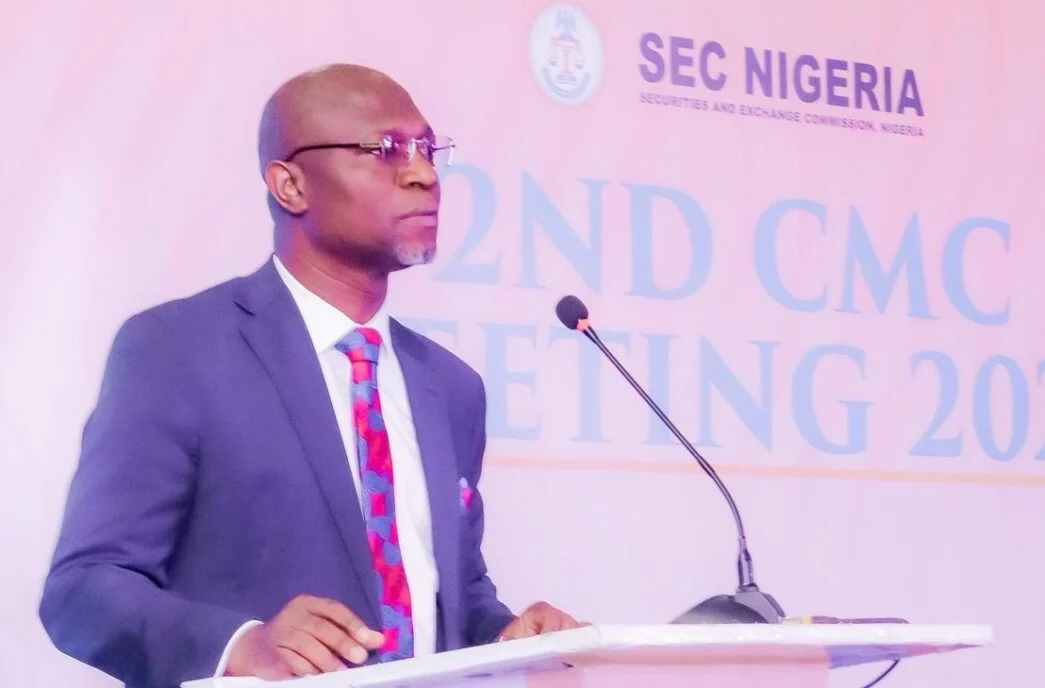
Nigeria’s Securities and Exchange Commission (SEC) has admitted three more virtual asset and digital investment companies into its Accelerated Regulatory Incubation Programme (ARIP), bringing the number of firms in the regulatory sandbox to 12 since July.
The latest entrants are Pisi Payment Solutions, the parent company of Nigerian fintech YDPay; BC Access (Nigeria) Limited, the legal entity of Blockchain Africa, a subsidiary of global cryptocurrency exchange Blockchain; and Yellow Card, a stablecoin infrastructure company.
The admissions give the companies Approval-in-Principle (AIP) status. This allows them to operate within the scope of the SEC’s sandbox while meeting the conditions and ongoing supervision set by the regulator.
The SEC admitted nine firms into ARIP in July, including investment platform GetEquity and crypto exchanges KuCoin Nigeria and Luno.
According to the regulator, AIP confirms that a company has met the requirements for admission into the programme. However, it is not the same as receiving a full operating licence.
ARIP, launched in June 2024, was created as a controlled environment where the SEC can assess new digital asset products, technologies, and business models before they are offered more broadly to investors.
The programme is also part of the SEC’s wider effort to bring Nigeria’s growing crypto industry under a clearer regulatory framework. After a slower pace of new admissions in 2025, the recent approvals suggest the regulator is taking a more active approach to bringing digital asset companies into the formal financial system.
The SEC first admitted crypto companies Busha and Quidax into the programme in August 2024, granting both firms Approval-in-Principle. The approvals were expected to pave the way for full licences after a one-year incubation period. However, the regulator has not publicly confirmed whether either company has completed that transition, leaving some uncertainty around the path from sandbox participation to full licensing.
The latest admissions come as Nigeria continues to rank among Africa’s biggest cryptocurrency markets. While the sector has faced regulatory uncertainty and restrictions in recent years, regulators are increasingly moving toward a model focused on licensing, supervision, and consumer protection rather than simply restricting crypto activity.
For Blockchain, joining the SEC’s programme is also a step toward deepening its presence in Nigeria.
“Nigeria is one of Africa’s most important digital asset markets,” Owen Odia, Blockchain’s general manager for Africa, said. He added that the programme would allow the company to work directly with the SEC, bring its global experience to the Nigerian market, and contribute to a regulatory framework that protects consumers while supporting innovation.
The SEC has stressed that admission into ARIP does not amount to a final licence. Digital asset companies must also meet the regulator’s capital and corporate governance requirements. Under the SEC’s current rules, exchanges and custodians can be required to maintain minimum capital of up to ₦2 billion ($1.5 million).
The expansion of ARIP points to a more structured approach to crypto regulation in Nigeria. With the SEC working alongside institutions such as the Central Bank of Nigeria and the Nigeria Revenue Service through the country’s Virtual Asset Council, the framework could provide more certainty for digital asset startups, investors, and international crypto companies looking to operate in one of Africa’s largest markets.