





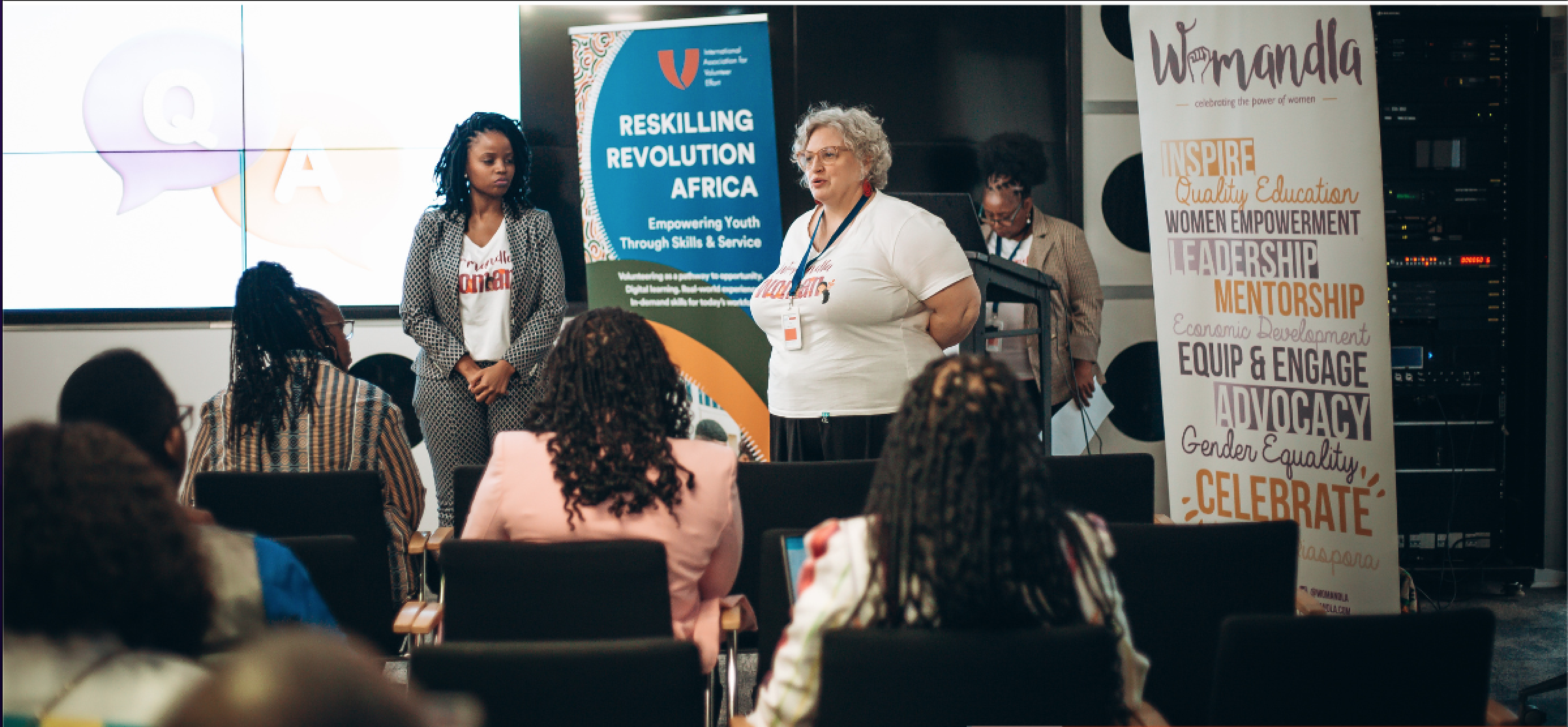
South African non-profit focused on upskilling, has partnered with the International Association of Volunteer Effort and IBM SkillsBuild to roll out Phase Two of Reskilling Revolution Africa in South Africa.
The initiative seeks to equip women and young people with future-ready skills as automation reshapes entry-level jobs across industries. Participants complete structured learning pathways on IBM’s free digital platform, earning globally recognised certificates in areas like digital literacy, AI, cybersecurity, entrepreneurship, and soft skills. The program combines online courses with mentorship, volunteering, and community projects to build practical experience.
“At IBM, we believe that access to technology skills is a catalyst for inclusive economic growth,” said John Matogo, IBM’s corporate social responsibility leader for Middle East and Africa, at the launch on Thursday.
Building on Early Success
Phase One, piloted in Nigeria, Ethiopia, and South Africa from late 2024, reached around 30,000 young people. Phase Two expands course offerings to include AI and green skills, with 8–10 week cohorts providing mentoring and post-training support to help participants turn their credentials into jobs, entrepreneurial ventures, or further studies.
Sam Gqomo, founder of Womandla Foundation, highlighted the urgency of rapid reskilling in South Africa, where youth unemployment for ages 15–24 hovers near 59%, one of the highest globally.
“We should pay less attention to predicting job losses and focus more on building adaptive learning ecosystems fast enough to keep up with technological change,” Gqomo said.
Preparing Youth for the AI Transition
Khadija Richards, head of impact at Womandla, described the AI transition not as a threat, but as a structural turning point for Africa’s workforce.
“Africa is the youngest continent in the world,” she said. “Young people are digitally adaptive, entrepreneurial, and comfortable navigating change. When AI moves quickly, youth are often the first to experiment with it.”
Automation, she noted, will primarily transform jobs built on repetitive tasks, including administration, retail operations, and routine data work. New opportunities are emerging in AI supervision, customer experience design, digital operations, tech-enabled supply chains, and platform entrepreneurship.
“Automation is not only changing jobs; it’s changing how young South Africans imagine work itself. Many want a career portfolio: a job, a side hustle, a gig, and a family business. Current education infrastructure doesn’t support that yet,” Gqomo added.
Bridging the Gap Between Skills and Opportunity
A recurring challenge across Reskilling Revolution Africa is misalignment: education and policy cycles move in years, while AI evolves in months.
“The key gap is alignment, not ability,” Richards said. “African youth are creative, resilient, and adaptive. Systems must ensure early AI fluency, applied learning, and recognition of alternative credentials.”
Without supportive policy and infrastructure broadband access, devices, inclusive STEM pipelines, and skills-based hiring incentives automation risks deepening inequality, benefiting already connected urban youth while displacing routine workers. But with targeted interventions, these technologies could broaden economic participation across regions.
“Africa’s youth are not behind the AI curve,” Richards said. “The real question is whether systems will empower youth to shape the new jobs.”


