


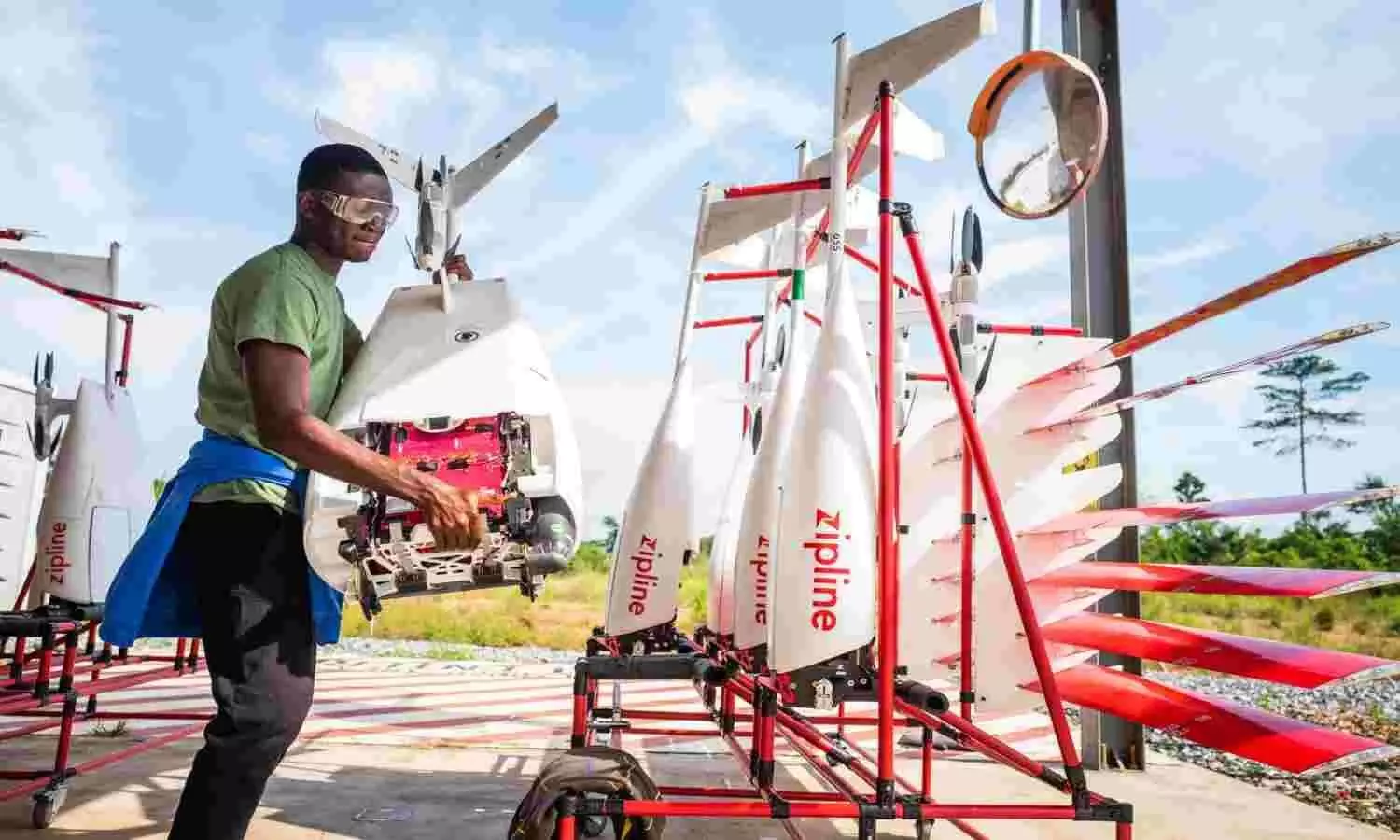
Zipline is shifting its Nigeria operations from a set of health-tech pilots into what it now describes as a nationwide healthcare logistics network.
The company, which began operating in 2022 with drone deliveries of vaccines and essential medical supplies in select states, now plans a major expansion that will see it build 12 additional distribution centres across the country.
According to Zipline’s Nigeria Country Director, Anthonio Pinheiro, this will grow its footprint from three hubs to 15 facilities nationwide, with the capacity to serve up to 20,000 health facilities and reach about 100 million people by 2028.
“Right now, with the three states we operate in Kaduna, Cross River and Bayelsa, we are serving over 1,300 health facilities and about six million people,” Pinheiro said. “The vision is to build an additional 12 distribution centres, which would serve up to 20,000 facilities and give access to 100 million people.”
The expansion marks a clear shift from small-scale deployments to a broader push to build a coordinated, national system for medical supply delivery, aimed at closing Nigeria’s long-standing last-mile healthcare gaps.
Zipline first launched in Kaduna State before expanding into Cross River and Bayelsa, but the new strategy focuses on scaling through a more unified national framework in partnership with government health systems.
Pinheiro said the shift reflects a turning point in the company’s approach.
“Every company reaches a pivotal point where it changes how it approaches the market,” he said.
While healthcare remains the immediate focus, Zipline says its infrastructure could eventually support other sectors, including agriculture, animal health, and logistics.
At the core of its model is Nigeria’s persistent challenge of weak medical supply chains. Rural health facilities frequently face shortages of vaccines, blood, malaria drugs, and maternal health supplies, forcing patients to travel long distances or go without care.
Zipline’s system uses centralized storage, automated distribution hubs, and on-demand drone deliveries to respond to these gaps.
“If a hospital requests 20 vaccine doses and 25 patients show up, they can call us, and we can deliver the additional five within 30 to 45 minutes,” Pinheiro explained.
The company says the model has already improved service delivery in supported areas, reducing stockouts and improving response times for emergencies such as blood and anti-venom deliveries.
In one case, anti-venom reached a remote facility within 47 minutes of an emergency request, a delivery Zipline says helped save a life.
Beyond healthcare delivery, the company highlights its infrastructure advantage in a country with unstable power supply. Its facilities in Kaduna and Cross River are fully solar-powered, with backup systems to ensure continuous operations.
Zipline also says the model reduces costs for state partners by cutting storage requirements, transportation expenses, and losses from expired medical stock.
As expansion continues, regulatory approval for drone operations remains a key factor in scaling across Nigeria. However, Pinheiro said collaboration with authorities has been steady.
He added that Nigeria is reaching a point where policy, demand, and technology are aligning to make large-scale autonomous delivery systems more viable.
While urban centres like Lagos and Abuja have relatively stronger healthcare access, he noted that many rural and riverine communities still face significant gaps. Zipline is aiming to close as it scales.