


South Africa already has the technology to move money between banks in seconds. For GoTyme Bank, the bigger question is why customers should have to pay extra to use it.
Interbank transfers have traditionally come with fees, partly because moving money between different banks comes with processing costs. But PayShap, South Africa’s instant-payment system, has been available to bank customers since 2023, allowing money to move between participating banks almost instantly.
Despite that, some banks still charge customers for using the service.
GoTyme Bank, the digital-first lender formerly known as TymeBank, is challenging that model. The bank has offered customers free PayShap payments of up to R5,000 ($309) since introducing the service in 2023. It now wants fee-free instant payments to become more common across the banking industry.
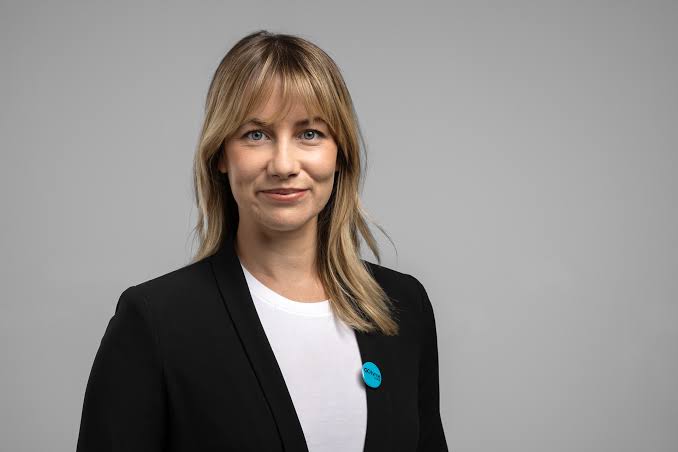
“It’s not that the underlying payment infrastructure has no cost,” said Marin Cundall, managing executive for digital experience at GoTyme Bank. “Our position is that a modern, efficient bank can make a strategic choice not to pass every cost directly to the customer.”
Why charge for seconds?
The cost of using PayShap is only one part of what determines the final price customers pay.
According to Cundall, banks have different operating costs, product structures and revenue models, so the amount charged to customers is not simply a reflection of what it costs to process an instant payment.
GoTyme believes its digital-first model gives it more room to absorb some of those costs instead of passing them on to customers.
“We see real-time payments as an essential part of everyday banking, not a premium service that customers should have to think twice about using,” Cundall said.
The argument becomes more relevant when people are sending small amounts.
A fee that seems insignificant on a large transfer can become much more noticeable when someone is paying for lunch, settling a small bill or sending money to a family member.
“A customer may accept a fee when transferring a large amount, but the same fee becomes difficult to justify when paying for lunch, settling a small service bill or sending a modest amount to a family member,” Cundall said.
For small businesses, instant and free payments can also have a practical impact.
A plumber could confirm that a customer has paid before leaving a job. A spaza shop could verify payment before handing over goods. A small business receiving money immediately could use it to restock, pay workers or settle a supplier.
The alternative is waiting for funds to clear or paying a fee to make the money available faster.
“We need to stop accepting settlement periods of up to three days as normal,” Cundall said. “When someone needs money for transport, food or electricity, two days is not a minor delay.”
Lessons from Brazil and India
GoTyme’s argument is not unique.
Brazil’s Pix and India’s Unified Payments Interface (UPI) have turned instant digital payments into everyday infrastructure used at massive scale.
Both systems have helped make real-time payments a normal part of everyday transactions rather than a premium feature reserved for people willing to pay more.
GoTyme points to these markets as examples of what can happen when instant payments are designed for mass adoption.
Cheslyn Jacobs, CEO of GoTyme Bank, argues that charging customers to move their own money instantly is a commercial decision rather than an unavoidable consequence of the technology.
“When your economy can’t move money freely, you’re leaving growth on the table,” he said.
The wider economic argument is that faster payments can help money circulate more quickly.
A 2026 World Bank report notes that faster payments can improve liquidity by making funds available immediately, allowing businesses to use money sooner for inventory, wages and other expenses.
But GoTyme is careful not to claim that its free instant-payment offering has already produced measurable changes in customer behaviour.
Cundall said the bank has not yet quantified whether removing fees has reduced cash usage or improved cash flow for small and medium-sized businesses.
“We should not claim that free Instant Payments have already reduced cash usage or improved SME cash flow by a particular percentage unless we have measured and verified that outcome,” she said.
For now, GoTyme’s position is straightforward: the infrastructure already exists, payments can happen in seconds, and banks have a choice about whether customers should pay extra for that convenience.
The bigger question is whether other banks will make the same choice.