


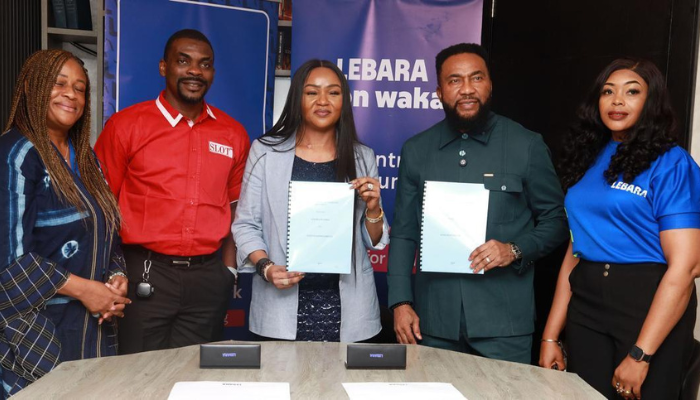
Lebara Nigeria, the local arm of London-based mobile virtual network operator (MVNO) Lebara Group, has started commercial operations in Nigeria, adding a new player to the country’s competitive telecom market.
Unlike MTN Nigeria, Airtel Nigeria, Globacom and 9mobile, Lebara does not own the mobile network infrastructure its customers will use. Instead, it will provide mobile services over Airtel Nigeria’s network while focusing on digital products, customer experience and additional services.
The launch makes Lebara the second MVNO to begin commercial operations under Nigeria’s current regulatory framework, following Vitel Wireless, which launched in October 2025. It is also Lebara Group’s first move into the African market.
Lebara received a Tier 5 MVNO licence from the Nigerian Communications Commission (NCC) in 2023 and has partnered with Airtel Nigeria as its host network.
The company began activating customers who had reserved personalised mobile numbers under its 0724 prefix during its pre-launch registration period. Customers can claim their numbers through the My LebaraNG app or at Slot stores.
A digital-first approach
Lebara is betting heavily on a digital experience as it tries to stand out in a market where telecom customers still rely heavily on physical shops, agents and street vendors for services such as SIM registration, replacements and account changes.
The company offers both physical SIM cards and eSIMs. Customers can also complete Know Your Customer (KYC) verification remotely through the app.
Lebara calls the process “Scan, Snap and Connect”, allowing customers to register and activate a line without visiting a telecom shop.
Mary Akin-Adesokan Fasheitan, Lebara Nigeria’s chief operating officer, said the company is not entering the market simply to compete on price.
“Our ambition is to compete across value, customer experience and digital convenience, while remaining competitively priced,” she said.
The company is targeting digitally active consumers, including young professionals, students and entrepreneurs. But it says its target market is not defined strictly by age.
“Nigeria’s digital generation is extremely important to our strategy, but we don’t see our audience simply through the lens of age,” Fasheitan said. “We see it through behaviour.”
The company says it wants to serve customers who expect telecom services to be simple, fast and increasingly digital.
That strategy, however, comes with a challenge. Nigeria has millions of consumers with different levels of smartphone access and digital literacy, while some customers may still prefer face-to-face support for important telecom services.
Lebara will therefore need to prove that a digital-first model can work at scale beyond Nigeria’s most digitally active consumers.
More than calls and data
Lebara is also looking beyond traditional voice and data bundles.
The company plans to offer cloud storage through Sabi Cloud, travel eSIMs, entertainment through LebaraPlay and services for businesses.
It also plans to introduce Buy Now, Pay Later options for eligible devices and offer financial services through partnerships.
These services put Lebara in competition with established operators that have also moved beyond basic connectivity.
MTN Nigeria, Airtel, Globacom and 9mobile already offer a growing range of digital, financial, entertainment and enterprise products alongside voice and data services.
Lebara’s advantage, it argues, is that it can concentrate on the customer-facing side of the business without having to build and maintain a nationwide radio network.
“Being an MVNO does not mean simply putting a brand on somebody else’s network,” Fasheitan said. “As a Tier 5 MVNO, Lebara Nigeria has the flexibility to operate across significant parts of that value chain.”
The network still matters
While Lebara controls important parts of its customer experience, its customers will ultimately depend on Airtel Nigeria’s network for mobile coverage.
That means factors such as network congestion, outages, geographic coverage and infrastructure disruptions can still affect the experience of Lebara customers.
The distinction is important because an MVNO can control services such as activation, billing, account management and customer support, but it does not control the physical mobile infrastructure responsible for connecting calls and data.
“For us, reliability goes beyond signal strength,” Fasheitan said. “It is about building trust by ensuring customers can connect seamlessly, activate their services easily, manage their accounts conveniently and access support whenever they need it.”
The NCC sets quality-of-service requirements for telecom operators, but customers’ experiences can still vary depending on where they live and the condition of the underlying infrastructure.
Nigeria’s MVNO market is still taking shape
Nigeria formally created a regulatory framework for MVNOs in 2022, introducing a five-tier licensing structure that allows companies to provide mobile services without building nationwide mobile radio networks.
But getting a licence is only the first step.
New MVNOs still need to secure relationships with host networks, build billing and customer-care systems, obtain numbering resources, meet regulatory requirements and develop distribution channels.
Most importantly, they have to convince Nigerians to try a new telecom brand in a market where the biggest operators have spent decades building their customer bases.
The NCC has issued 46 MVNO licences across its five categories, but only Vitel Wireless and Lebara Nigeria have so far launched commercial services.
That leaves a large gap between the number of companies licensed to operate and those that have actually reached customers.
Lebara says it will not judge its success solely by how many subscribers it can acquire in its first one or two years.
Instead, the company plans to focus on building a sustainable customer base and a digital and distribution ecosystem that makes its services easy to discover, buy and activate.
“We don’t believe that responsible growth means simply spending aggressively from day one,” Fasheitan said. “Our approach is to build, learn, optimise and scale.”
Lebara’s African debut
Lebara Group was founded in 2001 and is headquartered in London. The company operates as an MVNO in the UK, Netherlands, Germany, France and Denmark, while its brand is licensed in markets including Spain, Switzerland, Saudi Arabia and Australia.
The group says it serves more than four million customers globally.
Nigeria is now its first African market.
For Lebara, the opportunity is significant: Nigeria has one of Africa’s largest telecom markets and a growing population of consumers who increasingly expect digital services.
But entering the market is one thing. Winning customers from established operators will require more than a new SIM card.
Lebara will have to prove that its digital-first approach, customer experience and additional services can give Nigerians a compelling reason to switch or add another line to its network.