







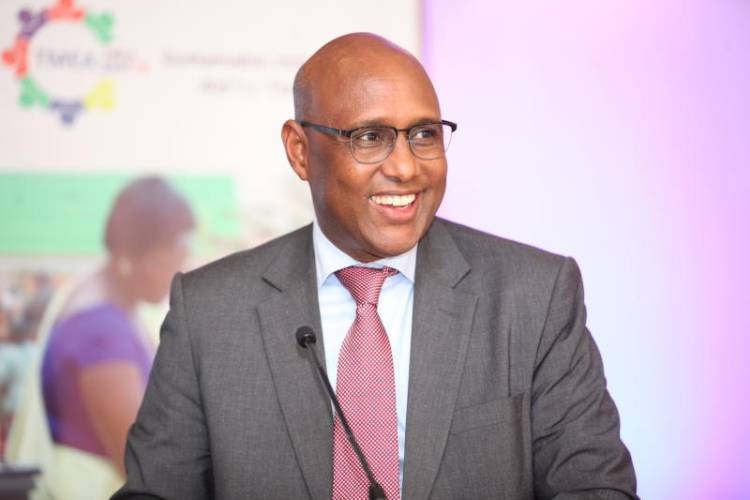
Adan Abdulla Mohamed as appointed the new Commissioner General of the Kenya Revenue Authority, in a leadership change that comes as the government intensifies efforts to improve revenue collection amid mounting fiscal pressure.
The appointment, announced by Treasury Cabinet Secretary John Mbadi and effective immediately, was published in a government gazette on Monday. It formalises a key transition at Kenya’s tax agency at a time when the country is facing rising debt servicing costs, slower economic growth, and ongoing shortfalls in public revenue.
Mohamed takes over from Humphrey Wattanga, who left the position in April after the KRA board opted not to renew his contract. The authority did not provide detailed reasons for his departure, noting only its appreciation for his service and the reforms undertaken during his tenure.
Tax collection remains central to President William Ruto’s economic plan, but also one of its most politically sensitive areas. The government continues to rely heavily on the KRA to fund spending commitments and reduce fiscal deficits, even as households struggle with high living costs and businesses face weaker demand.
Under Wattanga, the revenue authority expanded its use of digital monitoring tools, strengthened enforcement, and increased scrutiny of imports and businesses to broaden the tax base. While these measures helped improve compliance, they also drew criticism from business groups, who said the tighter enforcement added pressure to an already difficult operating environment.
Mohamed now steps into the role at a time when the agency is expected to raise more revenue without further slowing economic activity. Lawmakers are currently reviewing proposals in the Finance Bill 2026, which seeks to widen the tax base and strengthen compliance across sectors.
His appointment points to continuity in Kenya’s broader revenue strategy, even after the abrupt leadership change. The country remains under pressure to boost domestic revenue mobilisation as part of fiscal reforms supported by international lenders, including the International Monetary Fund.
KRA data shows the agency collected KES 2.038 trillion ($15.7 billion) in the nine months to March 2026, below its KES 2.122 trillion ($17 billion) target. However, this still represented an 11.4% increase from the same period the previous year, driven by expanded digital compliance systems and stronger enforcement, despite continued pushback from parts of the business community.
