


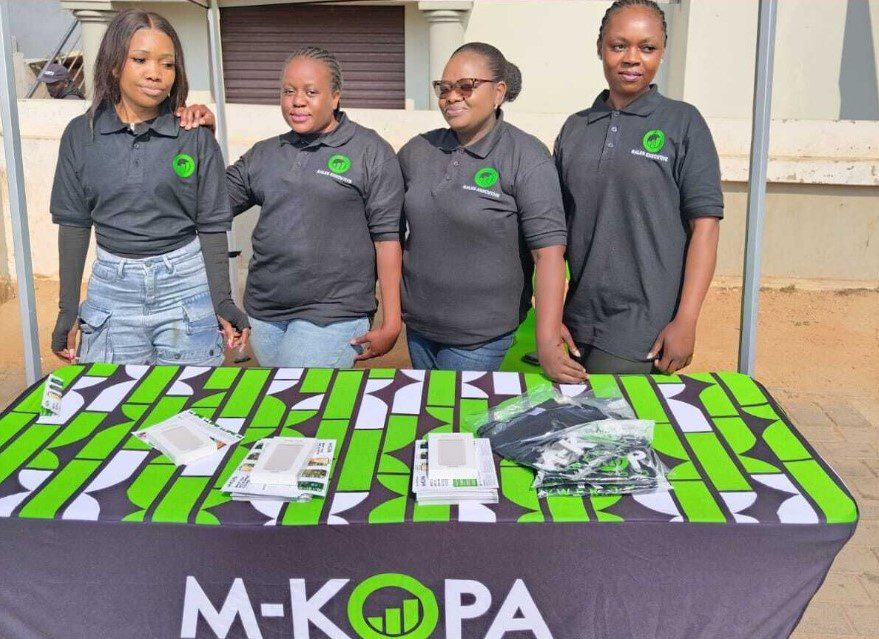
Kenyan asset financing startup, M-KOPA says it has extended more than ZAR 370 million ($22.5 million) in credit to low-income consumers in South Africa since launching in 2023, underscoring how device financing is reshaping access to the digital economy.
Women account for a large share of that growth, making up 49% of M-KOPA’s 105,000 customers. The company’s 2025 impact report shows that 36% of female customers are first-time smartphone users, compared to 24% of men.
Based on a survey of 452 customers and sales agents conducted by Caribou, the report found that 64% of users rely on their devices to earn income. About 35% say their earnings have increased, while 39% report being able to invest more in their children’s education.
In South Africa, where affordability remains one of the biggest barriers to digital access, M-KOPA is betting that flexible credit can bridge the gap between owning a smartphone and being able to afford one.
The broader context reflects a persistent connectivity gap. According to the Global Findex 2025 Digital Connectivity Tracker, 74% of adults in Sub-Saharan Africa own a mobile phone, compared to 86% globally, while 77% of those without one cite cost as the main barrier.
“South Africa’s unemployment crisis demands bold, inclusive solutions, and when everyday earners gain access to fair and flexible financing, they use it to unlock income, stability, and opportunity,” said M-KOPA South Africa general manager Cameron Perumal.
The company also reports wider socio-economic impact: 84% of customers say their quality of life has improved, while 66% say they are better able to meet household financial goals. Its customer base is largely urban (77%), with average daily earnings of about ZAR 185 ($11.25).
Beyond lending, M-KOPA says it contributed ZAR 24 million ($1.45 million) in taxes and ZAR 155.5 million ($9.46 million) in local procurement in 2024, while employing 155 people, 55% of them women.
Founded in 2010, the company has served more than 7 million customers across Africa and disbursed over $2.5 billion in credit across Kenya, Uganda, Ghana, South Africa, and Nigeria.
In South Africa, it plans to expand nationwide and introduce refurbished smartphones in 2026, as it continues betting that lower-cost devices and flexible financing can widen access to the digital economy for “everyday earners.”