


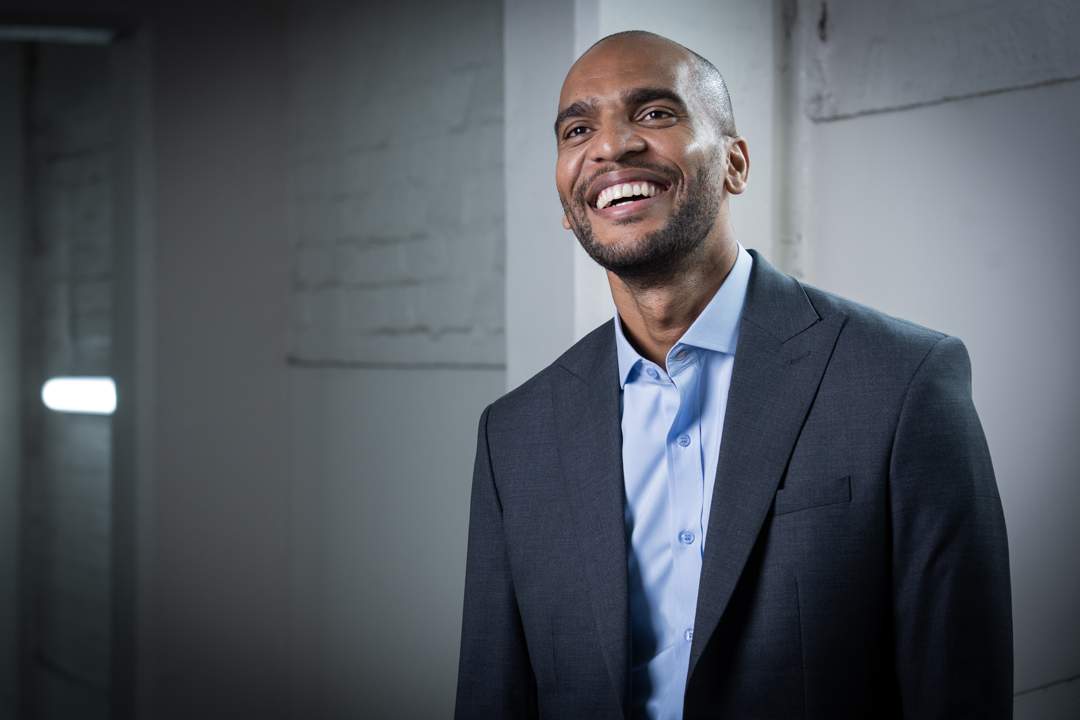
GoTyme Bank, the South African digital lender backed by billionaire Patrice Motsepe, is rolling out a long-term employee ownership programme as competition for fintech talent intensifies across the country’s banking sector.
The digital bank says the initiative will allow employees across the business to share in the company’s long-term growth, marking a shift in how African fintechs are approaching retention and incentives as they scale into more mature financial institutions.
Speaking on Tuesday, GoTyme Bank CEO Cheslyn Jacobs said the programme is structured through a Long-Term Incentive Programme (LTIP), giving qualifying employees a stake in the value the company creates over time.
“The programme gives qualifying employees the opportunity to participate in the value created over time and reflects our belief that the people building the business should share in its success,” Jacobs said.
The move comes at a time when South Africa’s fintech industry is becoming increasingly competitive, with startups and digital banks battling not just for customers, but also for experienced tech and financial talent.
As African fintechs push toward profitability and long-term scale, employee ownership schemes are increasingly emerging as a strategic tool for retaining staff and encouraging long-term commitment, replacing the once-popular Silicon Valley culture of flashy perks and rapid hiring.
South Africa has seen growing adoption of employee share ownership plans (ESOPs) in recent years. According to the country’s Department of Trade, Industry and Competition, more than 211,000 workers have benefited from ESOPs since 2019, with roughly R3.3 billion ($201 million) paid out in dividends. Major corporates including Vodacom and Old Mutual have also introduced similar programmes.
Jacobs said GoTyme’s scheme is designed to strengthen long-term alignment across the company while encouraging a stronger sense of ownership among employees.
Early feedback from staff suggests the programme is already changing how employees view their role within the business.
“Being shareholders has given us a whole new perspective on the business. We’re no longer simply contributing to GoTyme Bank’s growth; we’re sharing in it,” said Lindelani Nxumalo, a customer service representative at the bank. “That sense of ownership has made us more engaged, more committed, and even prouder to be part of the GoTyme Bank family.”
For senior staff, the programme is also reinforcing a stronger sense of long-term purpose within the organisation.
“It’s incredibly motivating to work at a company such as GoTyme Bank that sees employees as part of its long-term future,” said Lee-Anne Kalam, the bank’s Head of Marketing. “Becoming a shareholder makes me feel trusted and valued, and reinforces the sense that we are all contributing to something meaningful together.”
The employee ownership plan is open to staff who have spent more than six months at the company, reflecting a broader evolution in how African fintechs are thinking about compensation as they transition from startup disruptors into established financial institutions.
“We have reached a scale where it is important to deepen long-term alignment between employees, customers and shareholders,” Jacobs said. “The programme was fundamentally created to reinforce our ownership culture and recognise the contribution employees are making to the company’s growth.”
GoTyme declined to disclose how much equity has been allocated to employees, but Jacobs said the programme is focused on long-term participation and retention.
The strategy highlights a growing reality across Africa’s fintech ecosystem: experienced digital talent is becoming one of the industry’s most valuable assets.
Companies including Lesaka Technologies, Absa Bank and Capitec Bank have all experimented with equity-linked incentives, although such benefits have often been reserved for senior executives.
The timing is particularly significant for GoTyme, which now serves more than 21 million customers across South Africa and the Philippines. The bank has previously discussed the possibility of a future public listing as it continues to expand.
While the Philippines remains the bank’s biggest growth market due to its scale and population size, Jacobs said South Africa continues to outperform expectations, driven by strong customer adoption despite fierce competition in the country’s banking sector.
Although Jacobs stopped short of linking the employee ownership plan directly to any IPO ambitions, he acknowledged that the company is entering a more mature phase of growth.
“The timing reflects the maturity and momentum of the business more than any single future event,” he said. “We are building for the long term.”